
Without a consistent burst fade mullet maintenance routine, a burst fade mullet loses its shape within two weeks. The curved arc around the ear is the first thing to blur, and once that contrast disappears, the whole cut looks unintentional.
This guide covers exactly what to do between barber visits: when to trim, what products to use, and how to keep the fade and the mullet length in balance.
Why the Burst Fade Needs More Upkeep Than Other Fades
Unlike a standard taper or drop fade, the burst fade follows a circular arc around the ear. Even a few millimetres of new growth disrupts that curve, making the cut look patchy rather than blended.
The mullet length in the back also requires separate care; it needs moisture and light styling to stay controlled without looking flat.
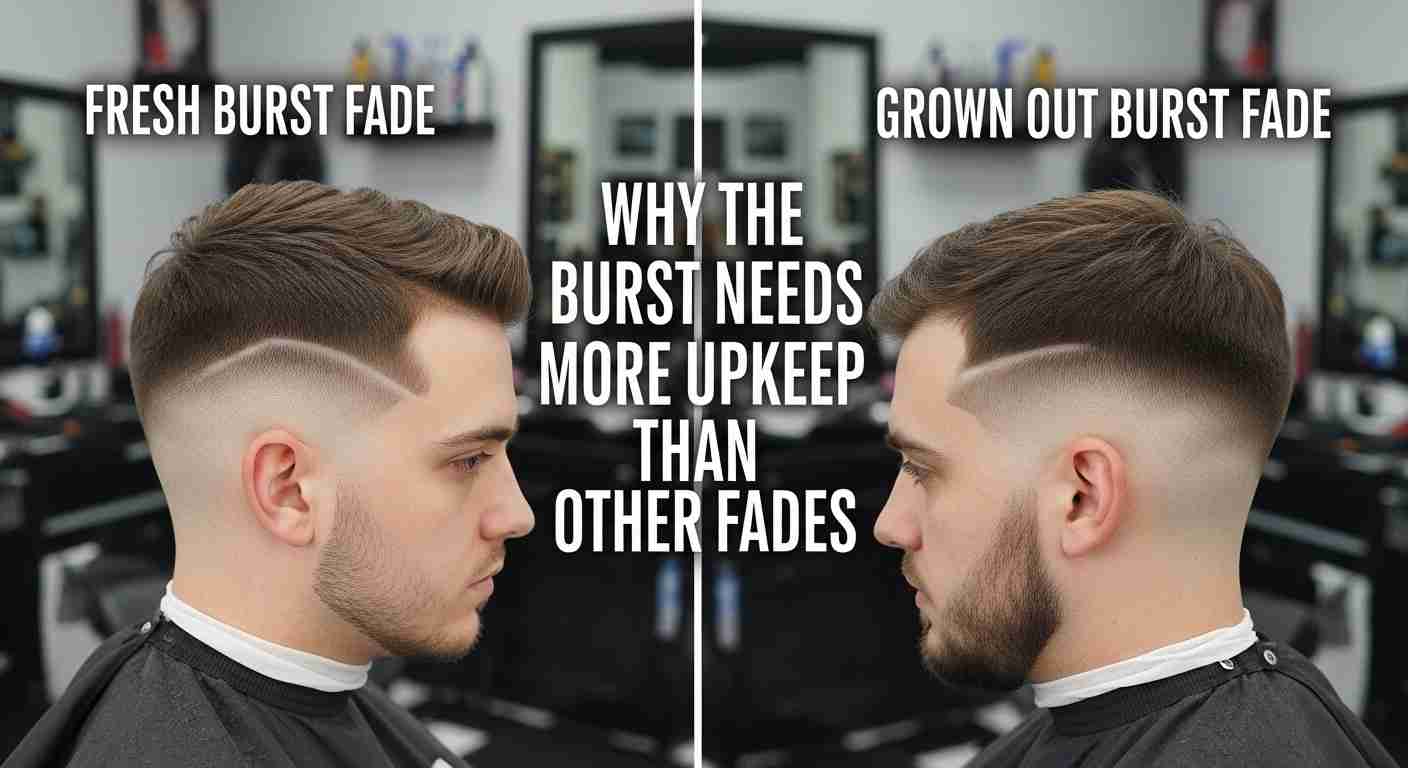
Think of the haircut as two zones with different needs:
| Zone | Area | Priority |
|---|---|---|
| Fade Zone | Around the ear and temple | Shape and contrast |
| Mullet Zone | Back length and layers | Moisture and movement |
Maintaining only one zone throws the whole cut off balance.
Trim Schedule by Variation
How often you need a barber visit depends on which version of the cut you have. Higher contrast = faster growth visibility.
| Variation | Barber Refresh | At-Home Cleanup |
|---|---|---|
| Low Burst Fade Mullet | Every 4–5 weeks | Neckline every 2 weeks |
| Mid Burst Fade Mullet | Every 3 weeks | Edge cleanup weekly |
| Skin Burst Fade Mullet | Every 2 weeks | Touch-ups every 5–7 days |
| Curly Burst Fade Mullet | Every 3 weeks | Deep condition weekly |
| V-Cut Mullet | Every 3–4 weeks | Nape cleanup every 3–4 weeks |
Barber tip: Most people wait 5–6 weeks. By that point the burst arc has already blurred. A quick refresh at the 2–3 week mark is cheaper than a full reshape and keeps the cut looking intentional throughout.
Maintenance by Variation
If you comparison here is burst fade mullet vs low taper fade
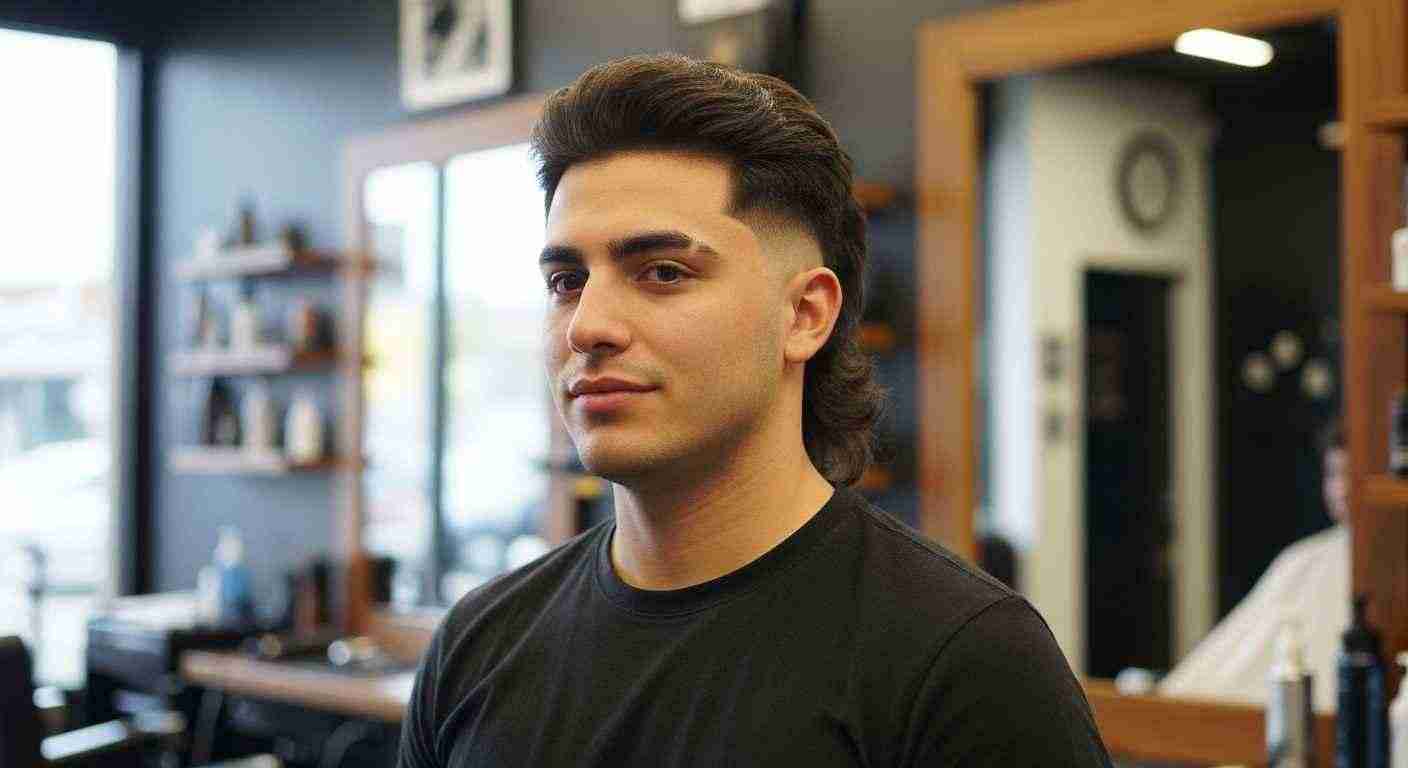
Low Burst Fade Mullet
Best for round and oval face shapes. The curve sits lower with less contrast, so it grows out the most gracefully.
- Styling: Matte cream, air-dry for natural flow
- Products: Baxter of California Clay Pomade, Hanz de Fuko Claymation
- Schedule: Barber every 4–5 weeks, neckline cleanup every 2 weeks
If you complete the guide, visit our low burst fade article:
Mid-Burst Fade Mullet
The most popular variation in 2026. Stronger contrast means sharper structure and slightly more upkeep.
- Styling: Blow-dry the crown upward for lift before applying product
- Products: Oribe Texturizing Spray, Ouai Wave Spray
- Schedule: Barber every 3 weeks, edge cleanup weekly
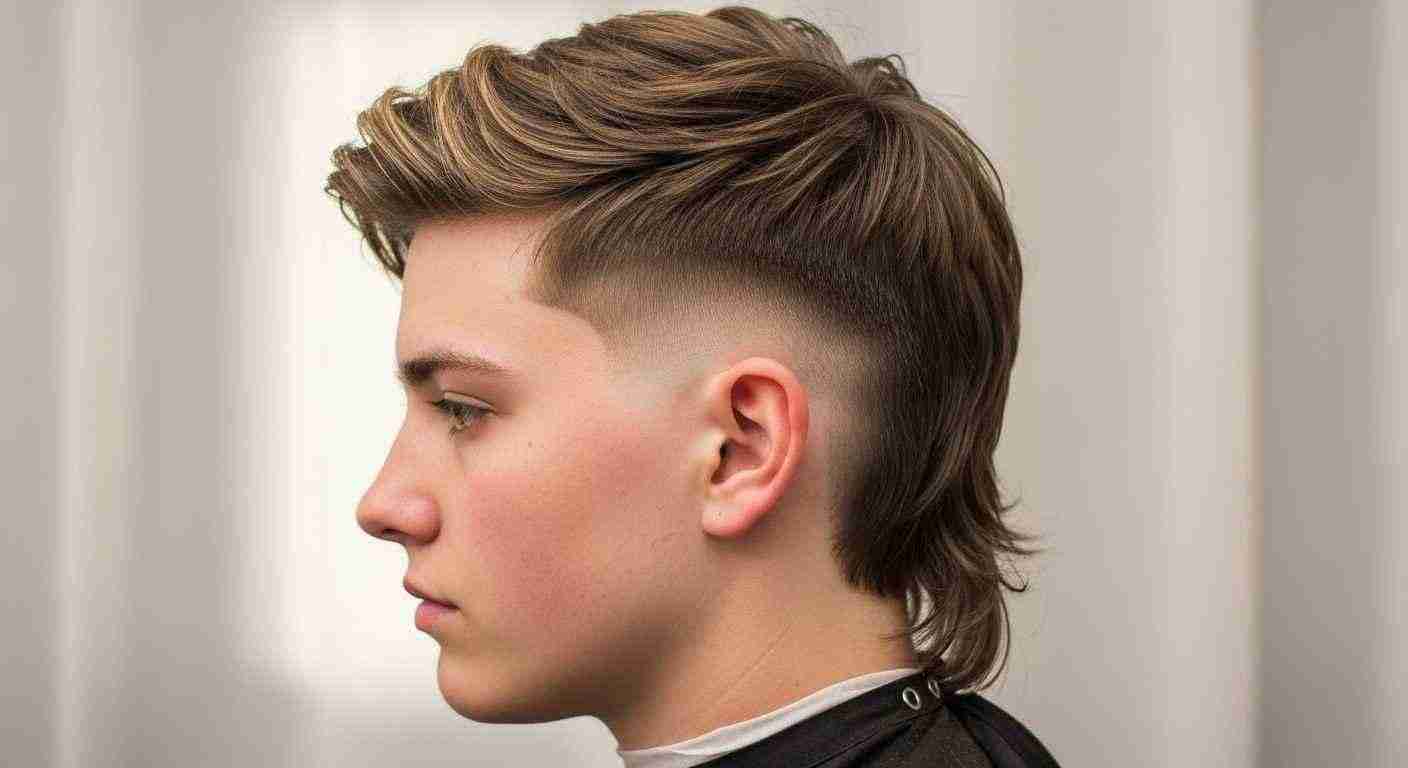
Skin Burst Fade Mullet
The most dramatic version. The fade goes to the skin, so even a day or two of growth shows clearly.
- Styling: Light wax or sea salt spray on the ends only, nothing on the fade
- Products: Bumble and Bumble Surf Spray, Kevin Murphy Hair. Resort
- Schedule: Barber every 2 weeks, touch-ups every 5 to 7 days

Curly Burst Fade Mullet
The fade keeps the sides tight, while the curls provide the volume. Moisture control is the priority here.
- Styling: Curl cream applied to damp hair, shaped with fingers only
- Products: Shea Moisture Curl Enhancing Smoothie, Ouidad Climate Control Gel
- Schedule: Deep condition weekly, fade refresh every 3 weeks
See also: Curly Mullet Styling Guide for full curl care routine

Burst Fade Mullet V-Cut
The V-shape at the nape elongates the back profile. The detail grows out faster than flat cuts, so nape cleanups matter.
- Styling: Work product downward to keep the point defined
- Products: American Crew Fiber
- Schedule: Nape cleanup every 3 to 4 weeks
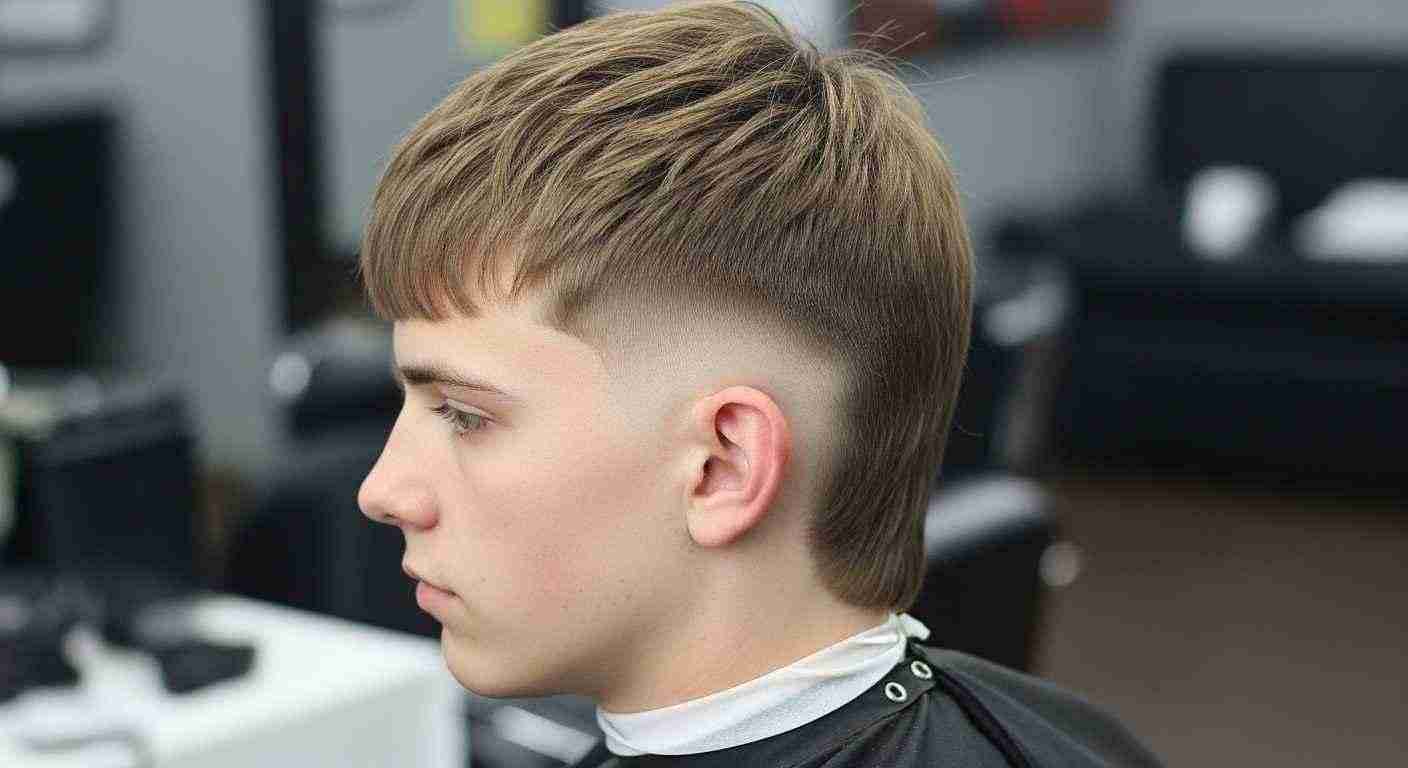
Burst Fade Mullet With Beard
If you maintain a beard alongside this cut,
see the
burst fade mullet with beard guide for separate fade and beard maintenance schedules.
Wolf Cut Burst Fade Mullet
If you have a wolf cut burst fade, the maintenance The schedule differs slightly. The arc needs a refresh every 3 weeks, but the wolf layers need a full reshape every 5 to 7 weeks. See the complete
wolf cut burst fade guide for the separate scheduling breakdown.
Daily and Weekly Maintenance Routine
Step 1: Wash and Hydrate (Every 2–3 Days)
Overwashing dries out the mullet length and creates frizz. Aim for 2–3 washes per week.
- Use a sulfate-free shampoo
- Apply conditioner to mid-lengths and ends only, not the scalp or the fade
- Rinse with cool water to improve shine
UK picks: Redken Brews, American Crew Daily Shampoo
Step 2: Apply Product (Daily)
Match the product to your hair texture:
| Hair Type | Product Type | Example |
|---|---|---|
| Curly | Curl cream | Shea Moisture |
| Wavy | Sea salt spray | Ouai Wave Spray |
| Straight / Thick | Matte clay | Hanz de Fuko Claymation |
Rule: Never apply product to the faded sides. It clogs the skin and dulls the contrast.
Step 3: Dry Correctly
- Air-dry for a relaxed, textured finish
- Diffuse on low heat if you want more volume
- Stop drying at 85–90%: the remaining moisture gives the hair natural movement
Use your fingers to shape. Combs flatten the texture the burst fade is built around.
Step 4: At-Home Edge Cleanup (Every 10–14 Days)
A detail trimmer lets you trace the neckline and the curve around the ear between barber visits. This is the single most effective thing you can do to extend the life of a fresh cut.
Recommended trimmers:
- Wahl Peanut
- Andis Slimline Pro
- Oster T-Finisher
Trace the existing line only; do not press into the blend or try to extend the fade yourself.
Step 5: Sleep Smart
Switch to a satin or silk pillowcase. Cotton creates friction that flattens the back overnight and causes frizz in textured mullets. A satin pillowcase reduces morning restyling time significantly.
Mistakes That Kill a Fresh Fade
Waiting too long between trims. The burst arc blurs faster than any other fade style. Book the refresh before you think you need it.
Applying product to the fade. Product on the faded skin dulls the contrast and can cause irritation. Keep product on the top and back only.
Overwashing. Washing every day strips the natural oils that keep the mullet length healthy. Two or three times a week is enough for most hair types.
DIY clipper work on the blend. Detail trimmers for the neckline and ear line are fine. Using clippers on the actual fade blend almost always creates patchy results. Leave the blend to the barber.
Aggressive towel drying. Rough towel drying roughens the hair cuticle and creates frizz. Pat dry, or use a microfibre towel.
Ignoring the neckline. The neckline grows visibly fast. A quick cleanup every 10–14 days with a trimmer keeps the whole cut looking deliberate.
Cotton pillowcases. See Step 5 above.
Quick Troubleshooting
| Problem | Fix |
|---|---|
| Fade looks patchy | Book a blend correction with your barber |
| Back length flips outward | Blow-dry downward with a small amount of product |
| Puffing behind the ear | A rice-grain amount of pomade and a boar bristle brush to smooth it down |
| Curl frizz in the back | Leave-in conditioner on damp hair, microfibre towel, satin pillowcase |
Maintenance Costs in the UK (2026)
| Service | Frequency | Typical Cost |
|---|---|---|
| Full cut (major reshape) | As needed | £35–£70 |
| Fade refresh | Every 2–4 weeks | £20–£40 |
| Detail trimmer (one-off) | — | £30–£60 |
| Styling products | Every 3–4 months | £15–£40 |
A good detail trimmer pays for itself within two or three barber visits by eliminating the need for frequent neckline appointments.
How to Talk to Your Barber
Clear communication at the chair means the cut grows out cleanly and maintenance is easier. Use these prompts:
- “I want a burst fade that wraps around the ear, not a drop fade.”
- “Keep the top 2–3 inches with texture.”
- “Leave 4–6 inches in the back with light layering.”
- “Which part will grow out first, and when should I come back?”
Bring two or three reference photos. Fade height and arc position vary significantly between barbers, so photos remove the ambiguity.
FAQs:
How often should I touch up a burst fade mullet?
Most people need a professional fade refresh every 2 to 4 weeks, depending on how fast their hair grows and how much contrast their variation has. Skin burst fades need attention every 2 weeks. Low burst fades can stretch to 4 to 5 weeks. Between barber visits, a detail trimmer for the neckline and ear line every 10–14 days is usually enough to keep the cut looking clean.
Which face shapes suit a burst fade mullet best?
Oval, square, and heart-shaped faces suit it best because the curved fade balances width and length naturally. Round faces benefit most from a mid- or high-burst variation, which adds height. Longer face shapes work well with the curly version, where the width of the curls softens the vertical line.
How do I prevent frizz in the mullet when I have curly hair?
Apply a leave-in conditioner to damp hair straight after washing. Dry with a microfibre towel rather than a standard cotton one, use a diffuser on low heat, and switch to a satin pillowcase overnight. Deep conditioning once a week keeps the back length hydrated enough to hold curl definition without puffing.
Can a burst fade mullet work with a beard?
Yes. Ask your barber for a seamless sideburn-to-beard blend so the fade doesn’t create a hard line where the beard begins. The burst arc naturally flows into the beard area, which makes this combination easier to pull off than it looks.
What’s the difference between a burst fade and a drop fade?
A drop fade follows the hairline and curves downward behind the ear toward the nape. A burst fade creates a semicircular arc that radiates outward around the ear, keeping more length at the back, which is why it works so well with the mullet.
Summary
Keeping a burst fade mullet sharp comes down to three things: refreshing the fade before the arc blurs (every 2 to 4 weeks depending on your variation), doing neckline and ear cleanups at home every 10–14 days with a detail trimmer, and keeping the mullet length moisturised and styled correctly for your hair type.
For the full breakdown of styles, variations, and inspiration, see the complete guide: